ASEAN Steel Energy Efficiency: Vietnam and Indonesia Reheating Furnace Roadmap
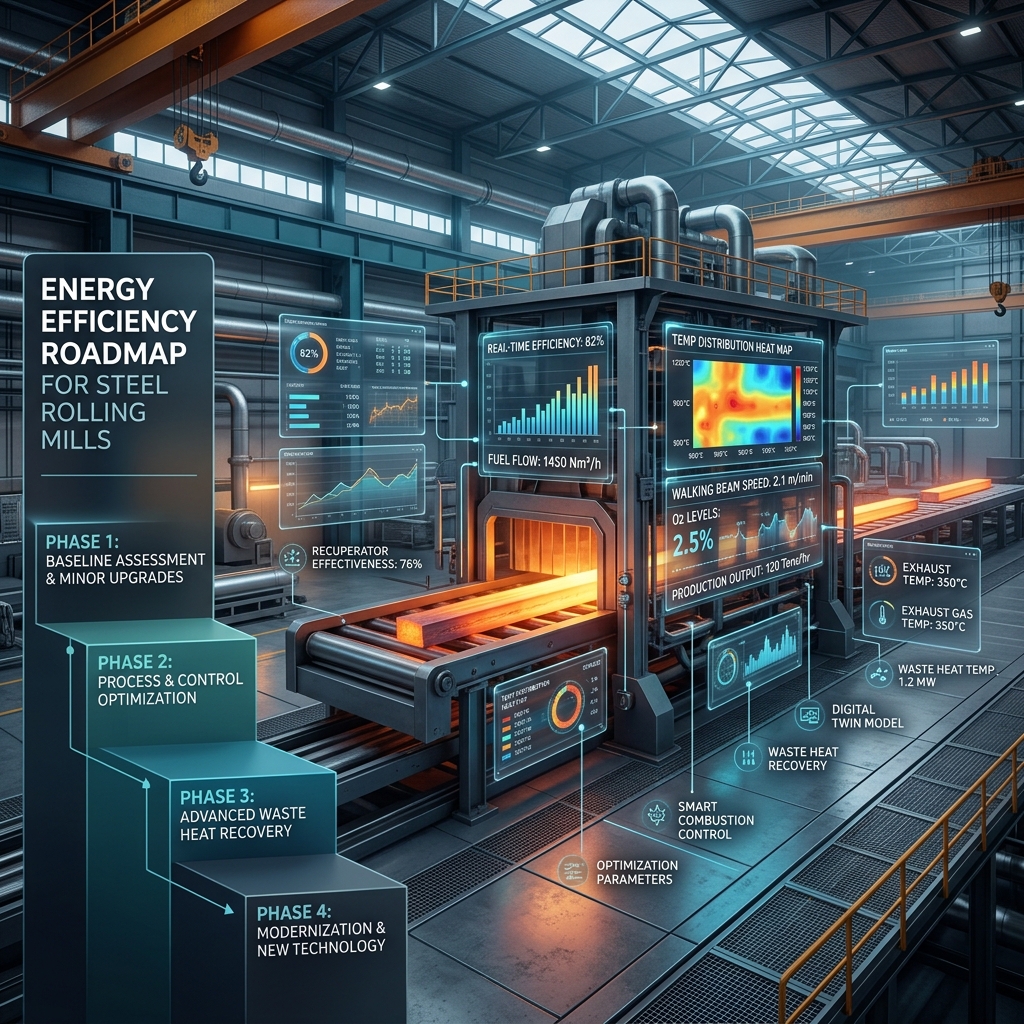
The Southeast Asian steel sector is navigating a critical transition. As Vietnam and Indonesia push forward with ambitious decarbonization roadmaps, steel manufacturers face twin pressures: compliance with national green industrial policies and the immediate need for operational cost reduction.
In this landscape, the reheating furnace — which accounts for approximately 60% to 70% of a rolling mill's total energy consumption — represents the most critical target for energy savings. By optimizing combustion control and waste heat recovery (WHR), steel mills can protect their operating margins from rising fuel prices and prepare for upcoming carbon quota limits.
This roadmap provides a detailed guide on how steel mills in Vietnam and Indonesia can achieve significant energy conservation and policy compliance.
Detailed Indonesia Audit & ROI Guide: For a deep dive into thermal auditing, fuel reduction baselines, and ROI metrics specific to the Indonesian market, read our newly released guide: Energy Efficiency for Indonesian Steel Rolling Mills: Reheating Furnace Audit and ROI →
At a Glance: Policy & Economic Comparison for Indonesia and Vietnam
The table below outlines the core economic and policy frameworks dictating energy decisions in the region's steel sector.
| Country | Key Policy Instrument | Core Energy Cost Factor | Target Compliance Requirement | Best-Practice Technical Action |
|---|---|---|---|---|
| Indonesia | Standar Industri Hijau (SIH) & HGBT Gas Prices | Gas Price: USD 6-7/MMBTU (quota) vs USD 9.5-12/MMBTU (excess) | Adherence to Domestic Component Level (TKDN) & Gas Quotas | WHR recuperator upgrades + AI zone combustion control |
| Vietnam | VNEEP3 & Decree 06/2022/ND-CP | Peak Power: 3,640 VND/kWh; Fuel Oil/CNG market rates | GHG Inventory reporting & mandatory emission reductions | AI-driven combustion control + EAF smart load shifting |
1. The ASEAN Steel Decarbonization Challenge: Reheating Furnace Focus
Reheating furnaces are the single largest thermal energy consumers in steel rolling mills, and optimizing them is the most cost-effective first step toward decarbonization.
-
The Problem: Most reheating furnaces in Southeast Asia run on legacy automated systems with fixed air-fuel ratios. As steel billet dimensions, throughput rates, and ambient temperatures fluctuate throughout the day, these static systems cannot adapt. This leads to either incomplete combustion (wasting fuel and creating carbon monoxide) or excess air intake (which carries precious heat out through the flue stack, increasing fuel consumption).
-
The Technical Principle: Smart thermal management utilizes high-precision oxygen and carbon monoxide sensors in the flue duct, coupled with zone-by-zone regulatory feedback loops. By keeping combustion at its near-perfect stoichiometric ratio, the system minimizes waste gas heat loss. This approach reduces overall fuel usage and limits oxide scale formation on the steel billets, preserving valuable steel mass.
-
FAQ Q&A: Why is combustion optimization the preferred first step for ASEAN steel mills over complete electrification? While electrifying processes using electric arc furnaces (EAF) is the long-term target, the ASEAN electricity grid remains heavily dependent on coal. Electrifying reheating furnaces immediately would simply shift carbon emissions to the utility provider, while incurring high capital expenditure. In contrast, optimization of current natural gas or fuel oil furnaces delivers immediate operational cost reductions with a fraction of the capital requirement.
-
Case Results: A mid-sized rolling mill in Southeast Asia recently integrated zone-by-zone combustion optimization. By maintaining excess oxygen levels below 2% across all zones, the mill recorded a measurable 8.4% reduction in fuel consumption, while scale loss on billets dropped from 1.5% to 1.1%, returning significant savings to the operator.
"Many rolling mills operate reheating furnaces below their designed thermal efficiency simply due to inadequate control systems. Upgrading these controls is the highest-ROI action a steel mill can take today." — Zhang Liang, Senior Process Engineer, South Technology
2. Indonesia's HGBT Gas Quota Limits & SIH Compliance
Indonesian steel mills must optimize fuel efficiency to operate within subsidized gas limits and meet green industrial standards.
-
The Problem: Indonesia's Harga Gas Bumi Tertentu (HGBT) policy has successfully supported domestic steel mills by capping natural gas prices at USD 6.00 to 7.00 per MMBTU. However, this gas is subject to strict monthly allocation limits. Once a steel mill exceeds its allocated quota, the additional gas must be purchased at market rates ranging from USD 9.50 to 12.00 per MMBTU. This premium rate immediately inflates the fuel bill, threatening the mill's competitive pricing.
-
The Technical Principle: To prevent mills from exceeding their monthly quotas, furnaces must operate at maximum thermal efficiency. This is achieved by linking the furnace combustion control software to real-time rolling mill scheduling. The system predicts production pauses and automatically ramps down the burners to a minimum holding temperature, preventing fuel waste during delays.
-
FAQ Q&A: How does the HGBT quota system affect production planning for steel mills? When gas consumption exceeds the quota, the marginal cost of rolling each additional tonne of steel increases by up to 70% due to market-rate gas pricing. This forces mills to either slow down production or find ways to reduce gas intensity. Upgrading furnace thermal efficiency ensures that the mill can maintain maximum throughput without crossing the HGBT quota boundary.
-
Case Results: By implementing predictive burner control and optimizing combustion zones, an Indonesian steel mill reduced its overall gas consumption by 9.2%. This efficiency gain allowed the mill to stay entirely within its monthly HGBT quota throughout the year, saving an estimated USD 180,000 in excess gas costs.
"Remaining within the HGBT quota is not just about fuel conservation — it is a critical requirement for maintaining stable cost per tonne in a competitive market." — Li Minghua, Project Director, South Technology
Harga Gas Bumi Tertentu (HGBT)
A policy framework established by the Government of Indonesia that provides natural gas at a subsidized rate of USD 6-7/MMBTU to strategic sectors, including the steel industry. The policy aims to boost industrial competitiveness but enforces consumption quotas, charging market rates for excess usage.
3. Vietnam's VNEEP3 Mandate & Carbon Quotas (Decree 06/2022/ND-CP)
Vietnamese steel mills face strict domestic energy-saving mandates and an upcoming carbon market.
-
The Problem: Under the Vietnam National Energy Efficiency Program (VNEEP3), the government has set a target of reducing total energy consumption by 8% to 10% by 2030. Simultaneously, Decree 06/2022/ND-CP establishes the legal framework for greenhouse gas inventories and the pilot carbon trading market. Steel mills are among the first industries required to report emissions and prepare for mandatory carbon quotas, meaning high-emissions mills will face significant carbon liabilities.
-
The Technical Principle: Decree 06 compliance requires verifiable carbon accounting. Modern combustion control systems calculate carbon dioxide emissions in real-time based on actual fuel flow rates, combustion chemistry, and stack oxygen levels. This continuous monitoring replaces simple estimates with precise, auditable data, while the optimization of the air-fuel ratio directly lowers the total volume of CO₂ emitted.
-
FAQ Q&A: When will carbon quotas become financially binding for steel mills in Vietnam? While the pilot carbon trading platform is starting in 2025-2026, the mandatory compliance and quota enforcement phase is scheduled for 2027-2030. Steel mills must act now to upgrade their thermal systems, as reducing fuel consumption today lowers the baseline carbon intensity before quotas are officially locked in.
-
Case Results: A rolling mill in northern Vietnam integrated real-time carbon tracking with automated combustion controls. This setup allowed them to document a verified 8.6% reduction in emissions, positioning the company to easily meet the initial target requirements under VNEEP3 and Decree 06.
"Energy efficiency under VNEEP3 is no longer optional. It is the core mechanism through which steel mills can mitigate their upcoming compliance risks under Decree 06." — Dr. Chen Wei, Chief Thermal Engineer, South Technology
📋 Combustion Efficiency Checklist
Auditing thermal efficiency is the first step toward policy compliance. Download our free self-audit checklist to evaluate your reheating furnace's current energy performance.
Download Free Checklist → | View Case Studies →
4. Waste Heat Recovery (WHR) & Combustion AI Technology
Combining advanced waste heat recovery with AI-driven burner controls yields the highest energy savings.
-
The Problem: In conventional reheating furnaces, exhaust gases leave the furnace chamber at temperatures exceeding 800°C. If this flue gas is vented directly into the atmosphere, up to 35% of the fuel's chemical energy is completely lost. Additionally, manual combustion tuning cannot respond to rapid changes in furnace load, leading to high fuel use and excessive burner wear.
-
The Technical Principle: A high-efficiency recuperator acts as a heat exchanger, transferring energy from the hot exhaust gas to the incoming combustion air, heating it up to 450°C. Preheated air requires significantly less fuel to reach target zone temperatures. Concurrently, AI combustion control algorithms analyze thermal variables in real-time to adjust air valves and fuel valves, keeping combustion optimized at all times.
-
FAQ Q&A: How does combustion AI prevent scale loss on steel billets? Excess oxygen in the furnace chamber reacts with the hot steel surface, creating iron oxide (scale loss). By using real-time sensor feedback, the AI combustion control keeps the oxygen levels as close to stoichiometric balance as possible. This limits the oxygen available to react with the steel, reducing scale loss and increasing product yield.
-
Case Results: An ASEAN steel mill upgraded to a double-pass metallic recuperator combined with an AI-driven combustion control dashboard. The combined system delivered fuel savings of 12.3% and reduced scale loss by 0.35%, leading to substantial financial returns.
"Integrating waste heat recovery with AI control creates a powerful synergy. The recuperator recovers thermal energy, while the AI ensures that energy is distributed efficiently across the zones." — Zhang Liang, Senior Process Engineer, South Technology
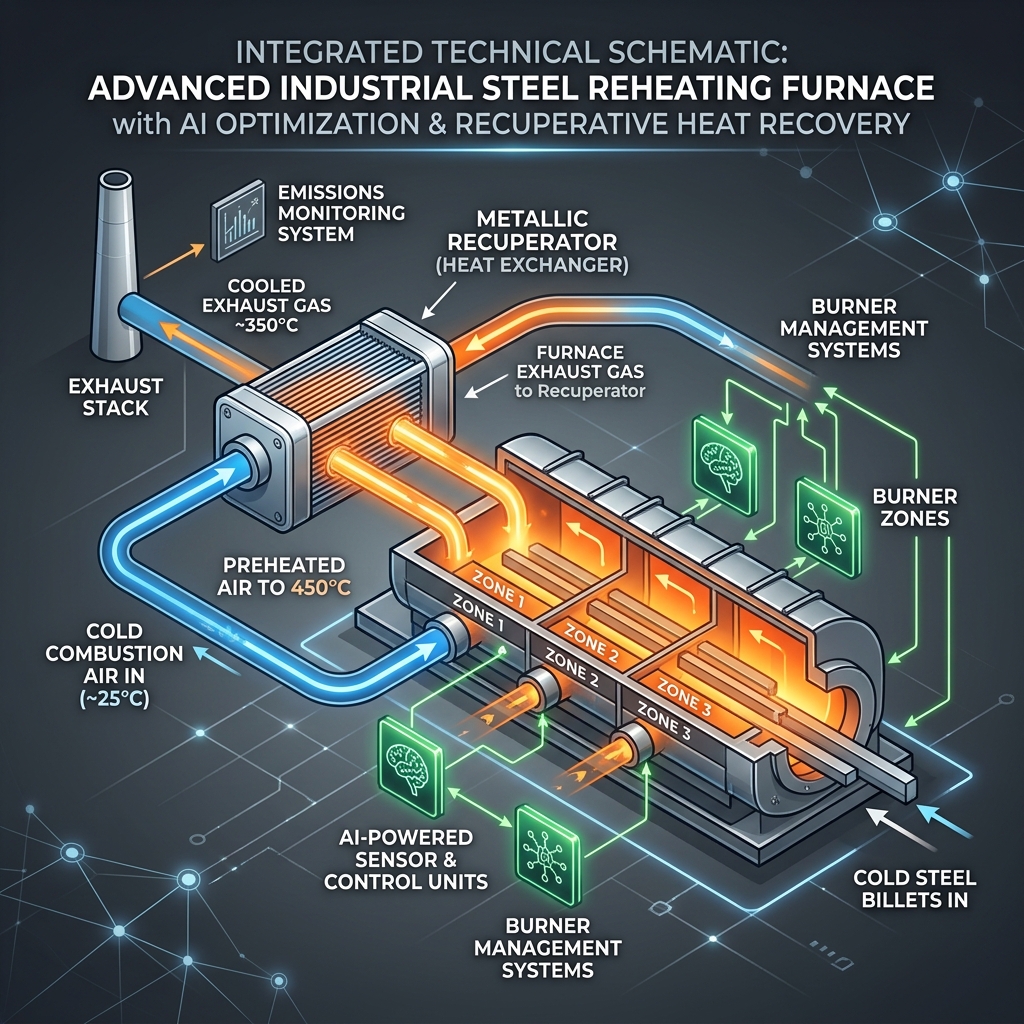 Figure 1: Technical layout of waste heat recovery (WHR) integrated with AI-driven zone-by-zone combustion control.
5. Performance-Based Zero CAPEX Model (Matching GISCO & Energy Steward)
Steel mills can upgrade their furnace efficiency with no upfront capital investment.
-
The Problem: Implementing deep thermal upgrades — such as installing recuperators, upgrading burners, and deploying AI control systems — requires significant capital investment, often exceeding USD 300,000. For many steel mills, competing capital demands and tight operating margins make upfront funding difficult to secure, stalling efficiency projects.
-
The Technical Principle: The performance-based service model (analogous to the Green Industry Service Company or GISCO concept) eliminates this funding barrier. The service provider designs, purchases, installs, and maintains the energy-efficiency equipment at their own cost. In return, the steel mill shares a percentage of the verified energy savings over an agreed contract period, aligning incentives between both parties.
-
FAQ Q&A: How are the energy savings verified under a performance contract? Savings are verified using international measurement and verification protocols (such as IPMVP). A baseline fuel consumption curve is established relative to production volume, steel grades, and temperature targets. Post-installation consumption is compared against this baseline, and the difference determines the shared savings. If no savings are achieved, the mill pays nothing.
-
Case Results: Under our Energy Steward Model, a steel mill upgraded its reheating furnace with zero upfront CAPEX. The project achieved a verified fuel reduction of 11.2%, and the savings were shared monthly, allowing the mill to improve cash flow from day one without any capital expenditure.
"The performance contract model shifts the technical and financial risk from the steel mill to us. We only succeed when our technology delivers measurable energy savings." — Li Minghua, Project Director, South Technology
Disclaimer (Kebijakan & Disclaimer)
The information provided in this article regarding Indonesia's Harga Gas Bumi Tertentu (HGBT) policy, Standar Industri Hijau (SIH), and Vietnam's VNEEP3 and Decree 06/2022/ND-CP regulations is for informational purposes only. While the described technology has achieved fuel savings of 7% to 15% in historical installations under specific operating conditions, actual energy savings and policy compliance outcomes may vary depending on furnace design, feedstock quality, fuel composition, and operational parameters. EcoReheating does not guarantee fixed energy savings percentages, tariff reductions, or specific regulatory approval outcomes.
Optimize Your Reheating Furnace with Zero CAPEX
Reduce fuel consumption and prepare for carbon compliance without upfront capital risk. Our engineers will audit your current furnace performance and design a custom T80-standard roadmap.
No upfront CAPEX required. Baseline energy audits are completed with minimal production downtime.
See how much you could save using our Energy Steward Model
Based on typical 11% fuel efficiency optimization.
Get Verified ROI AuditFrequently Asked Questions
Q.Why do gas quota limits under Indonesia's HGBT policy force steel mills to optimize thermal efficiency?
Indonesia's HGBT policy provides subsidized natural gas at USD 6-7 per MMBTU but imposes strict monthly consumption quotas. When a mill exceeds its quota, it must pay market rates of USD 9.50-12.00 per MMBTU for the excess gas, increasing energy costs by up to 70%. Upgrading reheating furnace combustion efficiency ensures operations stay within the HGBT quota limits.
Q.How does waste heat recovery (WHR) integrate with AI-driven combustion control to maximize fuel savings?
Waste heat recovery systems capture hot flue gases to preheat combustion air up to 450°C. Meanwhile, AI combustion control dynamically adjusts the air-fuel ratio zone-by-zone to maintain ideal stoichiometric conditions. Together, they eliminate heat loss through the stack and prevent excess air from cooling the furnace chamber, resulting in verified fuel savings.
Q.What are the compliance timelines for Vietnam's Decree 06/2022/ND-CP carbon quotas in the steel sector?
Under Decree 06/2022/ND-CP, selected steel mills in Vietnam must conduct greenhouse gas inventories and prepare for the pilot carbon trading market starting in 2025-2026. Official carbon quota allocations and enforcement are scheduled for 2027-2030, meaning mills must implement fuel-reduction technologies now to mitigate future carbon liabilities.
Q.Can a performance-based contract align with Kemenperin's Green Industry Standards (SIH)?
Yes. The Energy Steward Model aligns perfectly with Kemenperin's green industrial policies (including Standar Industri Hijau) by enabling steel mills to install advanced energy conservation equipment at zero upfront CAPEX. The technology provider invest all capital, and returns are shared solely from verified fuel and energy savings.
Zhang Liang
Senior Process Engineer, South Technology
Zhang Liang has over 12 years of experience in thermal automation and AI-driven control systems, specializing in energy conservation audits and digital transformations for large-scale steel rolling mills across Southeast Asia.