Zero CAPEX Model & Energy Retrofit Guide
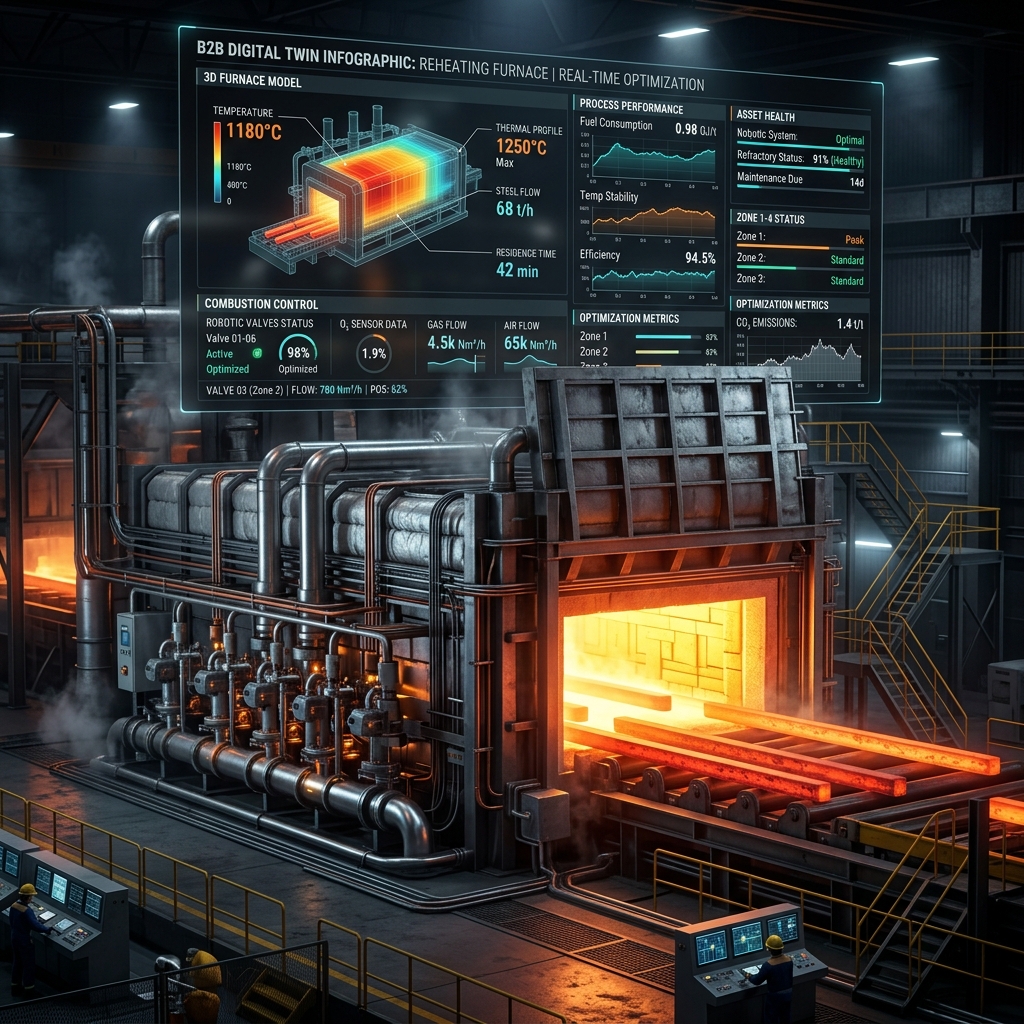
As heavy industrial manufacturers navigate the volatile economic climate of 2026, they face an urgent financial challenge. Energy costs are rising: peak industrial electricity tariffs have reached historic highs, natural gas and fuel oil prices fluctuate unpredictably, and international trade mechanisms like the EU's Carbon Border Adjustment Mechanism (CBAM) penalize carbon-intensive goods.
At the same time, global economic pressure has tightened corporate budgets, leaving capital expenditure (CAPEX) allocations at an all-time low.
For plant engineers and operations directors, the mandate is clear: cut fuel consumption, reduce carbon intensity, and lower unit production costs. Yet, when requesting $300,000 to $800,000 to modernize an aging furnace, they face an immediate roadblock from the CFO: "We cannot approve any high CapEx projects this fiscal year."
This capital bottleneck is resolved through the Zero CAPEX Model for Industrial Energy Retrofits. Similar to how solar PPAs transformed corporate renewable energy, this financing and engineering framework allows steel mills and heavy processing plants to execute comprehensive efficiency overhauls with $0 upfront investment, zero balance sheet debt, and zero technology risk.
1. Zero CAPEX Meaning: What Does CapEx Mean in Simple Terms?
To evaluate why the zero CAPEX model is gaining rapid adoption across global heavy industry, it is essential to clarify core financial terms.
What Does CapEx Mean in Simple Terms?
In simple terms, CapEx (Capital Expenditure) represents the major funds a company invests to purchase, build, or upgrade fixed physical assets. In a steel mill, typical CapEx items include installing a new walking beam reheating furnace, purchasing rolling stands, or constructing building infrastructure.
CapEx expenditures require substantial upfront cash or commercial bank financing, impact the corporate balance sheet, and must be depreciated over 10 to 25 years.
Is a High CapEx Good or Bad?
- High CapEx can be good when a company is aggressively expanding capacity into high-margin product lines during an economic boom.
- High CapEx is bad or high-risk when margins are narrow, interest rates are elevated, or the investment is intended for efficiency upgrades. If an expensive system underperforms, the plant remains burdened with debt and depreciation charges.
What is CapEx and Non CapEx? (CapEx vs. OpEx Model)
In industrial energy management:
- CapEx Model: The mill pays 100% of equipment, civil engineering, and integration costs out of its capital budget, assuming all technological and execution risks.
- Non-CapEx / OpEx Model (Zero CAPEX): The technology partner funds 100% of the project. The plant treats the arrangement as an Operational Expense (OpEx) paid strictly out of monthly verified energy bill savings.
[Traditional CapEx Model]  ──> $500,000 Upfront Cash Outlay ──> Balance Sheet Debt ──> Plant Bears 100% Risk
[Zero CAPEX OpEx Model]    ──> $0 Upfront Cash Outlay       ──> Funded by Savings   ──> Provider Bears 100% Risk
2. What is the Zero CAPEX Model in Industrial Retrofits?
The Zero CAPEX Model (also structured as Contract Energy Management / CEM or the Energy Steward Model) is an all-inclusive technical and financial partnership.
Zero CAPEX Solar PPA vs. Industrial Zero CAPEX Retrofit
While commercial facilities frequently encounter zero capex solar or zero capex solar PPA (Power Purchase Agreements for rooftop photovoltaic panels), heavy manufacturing demands a much deeper technical integration:
- Core Process Modernization: Rather than merely offsetting grid power, an industrial zero CAPEX retrofit directly upgrades the combustion chamber, refractory linings, and thermodynamic recovery systems of energy-intensive thermal assets.
- True Turnkey Investment: The technology partner acts as a full-service EPC (Engineering, Procurement, Construction) and investment vehicle, providing complete turnkey delivery.
Financial Comparison: Traditional Upgrade vs. Zero CAPEX Energy Retrofit Program
| Evaluation Metric | Traditional CapEx Upgrade | Zero CAPEX Energy Retrofit Program | Operational Impact |
|---|---|---|---|
| Upfront Capital Required | $500,000+ | $0 | 🟢 Bypasses capital expenditure approval committees |
| Balance Sheet Impact | Increases debt / liabilities | Off-balance sheet operational model | 🟢 Preserves credit lines for core operations |
| Technology Integration Risk | Borne 100% by the mill | Borne 100% by technology provider | 🟢 Complete engineering accountability |
| Routine O&M Maintenance | Mill pays all parts & labor | Included at $0 cost during term | 🟢 Eliminates unexpected repair budgets |
| Project Cash Flow | Negative for 3 to 5 years | Positive from Month 1 | 🟢 Immediate net cash generation |
| Asset Transfer Terms | Already owned | 100% ownership transferred at $0 | 🟢 Client owns all upgraded assets upon term completion |
3. Inside a Zero CAPEX Energy Retrofit Project: Step-by-Step
Executing a successful zero capex energy retrofit project requires strict engineering rigor and transparent measurement protocols.
[1. Baseline Heat Audit] ──> [2. T80 Engineering Design] ──> [3. Offsite Prefabrication] ──> [4. 2-4 Day Rapid Install] ──> [5. AI Tuning & Value Sharing]
Phase 1: Baseline Fuel & Thermal Audit
Using our online Reheating Furnace Heat Balance Calculator alongside calibrated on-site flue gas analyzers and temperature loggers, engineers analyze 12 months of historical operations to lock in the exact baseline fuel intensity (Nm³ of natural gas or kg of oil per ton of heated steel).
Phase 2: Tailored Engineering Design (CISA T80 Technologies)
We engineer a holistic retrofit package incorporating technologies certified under the Chinese Iron and Steel Association (CISA) T80 Extreme Efficiency standard:
- All-Ceramic Fiber Low-Inertia Roofs: Reduces furnace roof weight by 90% and eliminates structural heat storage loss.
- High-Emissivity Nano-Coatings: Penetrates refractory micro-pores to boost thermal radiation transfer to billets by 15-25%.
- Closed-Loop AI Combustion Systems: Adjusts air-fuel ratios in sub-second intervals to maintain optimal furnace atmosphere.
Phase 3: Offsite Prefabrication & Zero-Downtime Installation
To prevent costly rolling mill downtime, all hardware modules (fiber blocks, pre-piped valve racks, instrumentation skids) are manufactured and pre-tested offsite. On-site installation is scheduled precisely during the plant's routine maintenance shutdown—requiring only 2 to 4 days of physical work.
Phase 4: Measurement & Verification (M&V)
High-precision digital flow meters monitor fuel consumption under identical steel grades and production rates. The mathematical delta between the pre-retrofit baseline and actual consumption determines verified monthly savings.
Phase 5: Value Sharing & Transfer
The accrued savings are shared between the plant and the retrofit company according to the contract schedule. After the agreement term concludes (typically 3–5 years), 100% ownership of all hardware and software transfers to the plant at zero cost.
4. The 5 Risk Shields of the Energy Steward Model
Industrial CFOs and plant managers often express valid skepticism: "If it requires zero investment from us, where is the catch?"
To address operational and financial accountability, our Energy Steward Model includes five contractual "Risk Shields":
Shield 1: 100% Capital Funding ($0 CAPEX)
South Technology and strategic clean-energy financing partners assume the entire financial burden. Refractory materials, intelligent control valves, oxygen sensors, and labor are fully financed.
Shield 2: Performance-Guaranteed Baseline
If fuel consumption does not decrease below the established baseline under equivalent operating conditions, the plant pays $0. We generate zero revenue unless real, metered savings occur.
Shield 3: Fast-Track 2–4 Day Installation
We guarantee that physical installation will not interrupt normal production schedules. By scheduling work during planned mill maintenance, unscheduled downtime is eliminated.
Shield 4: Complete Lifecycle Maintenance & Upgrades
Throughout the contract term, all replacement parts, refractory maintenance, sensor recalibrations, and AI software updates are provided at zero additional cost.
Shield 5: Complete $0 Asset Transfer
At the conclusion of the contract, all assets transfer to the mill. The client inherits a modernized, high-efficiency furnace with zero debt obligations.
5. Case Study: Zero CAPEX Reheating Furnace Retrofit at Vina Kyoei Steel
A premier example of a successful zero capex energy retrofit project is the modernization completed at Vina Kyoei Steel.
Facing escalating industrial natural gas tariffs and export carbon reporting requirements, Vina Kyoei engaged our engineering team under the Zero CAPEX Energy Steward Model.
Retrofit Scope:
- Investment Amount: $450,000 (100% funded by South Technology).
- Technologies Deployed: CISA T80 full-fiber suspended roof, high-emissivity refractory wall coatings, and real-time oxygen trim AI combustion control.
- Installation Window: 3.5 days during a scheduled maintenance shutdown.
Verified Operational Results:
- Fuel Reduction: 13.5% reduction in natural gas consumption per ton of billet heated.
- Scale Loss Reduction: Billet oxidation scale loss dropped by 0.35%, directly increasing rolling yield.
- Financial Impact: Net positive cash flow exceeding $6,500 per month from Month 1, with zero upfront capital spent.
"The Zero CAPEX model allowed us to bypass corporate capital allocation hurdles and start saving substantial energy immediately. South Technology assumed the performance and financial risks, delivering measurable results from week one."
— Chief Mechanical Engineer, Vina Kyoei Steel
6. How to Select Zero CAPEX Energy Retrofit Companies
When evaluating potential zero capex energy retrofit companies, industrial facility executives should look for four critical qualifications:
- Verifiable Heavy-Industry Track Record: Ensure the provider specializes in heavy thermal processes (such as furnace efficiency upgrades), rather than generic commercial HVAC or lighting.
- Certified Technology Standards: Look for verified benchmark technologies (like CISA T80) that have documented energy reduction credentials.
- Transparent Baseline Protocols: Insist on clear, open-book baseline formulas that account for billet dimensions, furnace push rates, and steel grades.
- Strong Capital Backing: Confirm that the provider has the balance sheet strength to fund million-dollar projects without subcontracting financial risk.
Take Action: Benchmark Your Plant's Zero CAPEX Potential
Waiting for corporate CAPEX budgets to loosen while energy rates continue to climb drains industrial competitiveness.
Through the Zero CAPEX Model, you can cut fuel costs by 7–15%, reduce Scope 1 emissions for CBAM compliance, and modernize your thermal assets without spending a dollar of your capital budget.
Zero-Risk Preliminary Feasibility Audit
Request Your Zero CAPEX Feasibility Study
Our thermal engineering specialists will evaluate your furnace operational logs, benchmark your heat losses against CISA T80 standards, and deliver a tailored Zero CAPEX proposal with guaranteed fuel reductions.
$0 Upfront Investment
Guaranteed 7-15% Fuel Savings
Immediate Monthly Positive Cash Flow
See how much you could save using our Energy Steward Model
Based on typical 11% fuel efficiency optimization.
Get Verified ROI AuditFrequently Asked Questions
Q.What is the zero capex model meaning?
The zero CAPEX model meaning refers to a project financing and delivery structure where an industrial client incurs $0 in upfront capital expenditures (CapEx). The technology provider finances 100% of the engineering, equipment procurement, installation, and commissioning. The client only pays for verified energy savings over a contracted period, transforming capital expenses into self-funding operational savings.
Q.What does CapEx mean in simple terms?
In simple terms, CapEx (Capital Expenditure) is the money a company spends to buy, upgrade, and maintain physical assets like heavy industrial machinery, buildings, or reheating furnaces. High CapEx requires upfront cash reserves or bank loans and appears on the balance sheet as an asset depreciating over time.
Q.What is the difference between a CapEx and OpEx model in energy retrofits?
In a traditional CapEx model, the plant pays 100% of the equipment and engineering costs upfront and assumes all operational and performance risks. In an OpEx / Zero CAPEX model, the service provider funds the entire project; the plant pays nothing upfront and covers the service fee entirely out of verified monthly energy savings, keeping net cash flow positive from day one.
Q.Is a high CapEx good or bad for plant efficiency projects?
For efficiency and decarbonization projects, a high CapEx is often a major obstacle because it ties up working capital, requires lengthy board approvals, and exposes the company to technology failure risks. A zero CAPEX or low CapEx approach is superior because it delivers immediate energy and emission reductions without balance sheet strain.
Q.What is the real zero capex energy retrofit cost for an industrial facility?
For the industrial plant, the zero CAPEX energy retrofit cost is $0 upfront and $0 out-of-pocket throughout the project lifecycle. All equipment, engineering, labor, and ongoing maintenance costs are funded by the technology provider. The project cost is recovered solely through a pre-agreed percentage share of the verified fuel savings.
Q.How do zero capex energy retrofit companies guarantee savings?
Reputable zero CAPEX energy retrofit companies like EcoReheating establish a rigorous 12-month historical consumption baseline (e.g., Nm³ of gas per ton of steel heated). Continuous sensor measurement verifies post-retrofit fuel usage under identical operating parameters. If the verified savings do not materialize, the client pays zero.
Q.What happens to the equipment after the zero CAPEX contract term ends?
At the conclusion of the contract term (typically 3 to 5 years), 100% ownership of all installed equipment, refractories, smart valve trains, and software licenses is transferred to the plant at zero cost ($0), and the plant retains 100% of all ongoing energy savings.
Li Minghua
Project Director, South Technology
Li Minghua has over 18 years of experience in contract energy management (CEM) and large-scale industrial furnace retrofits across Asia.