Vietnam Steel Mill Energy Savings: Zero CAPEX
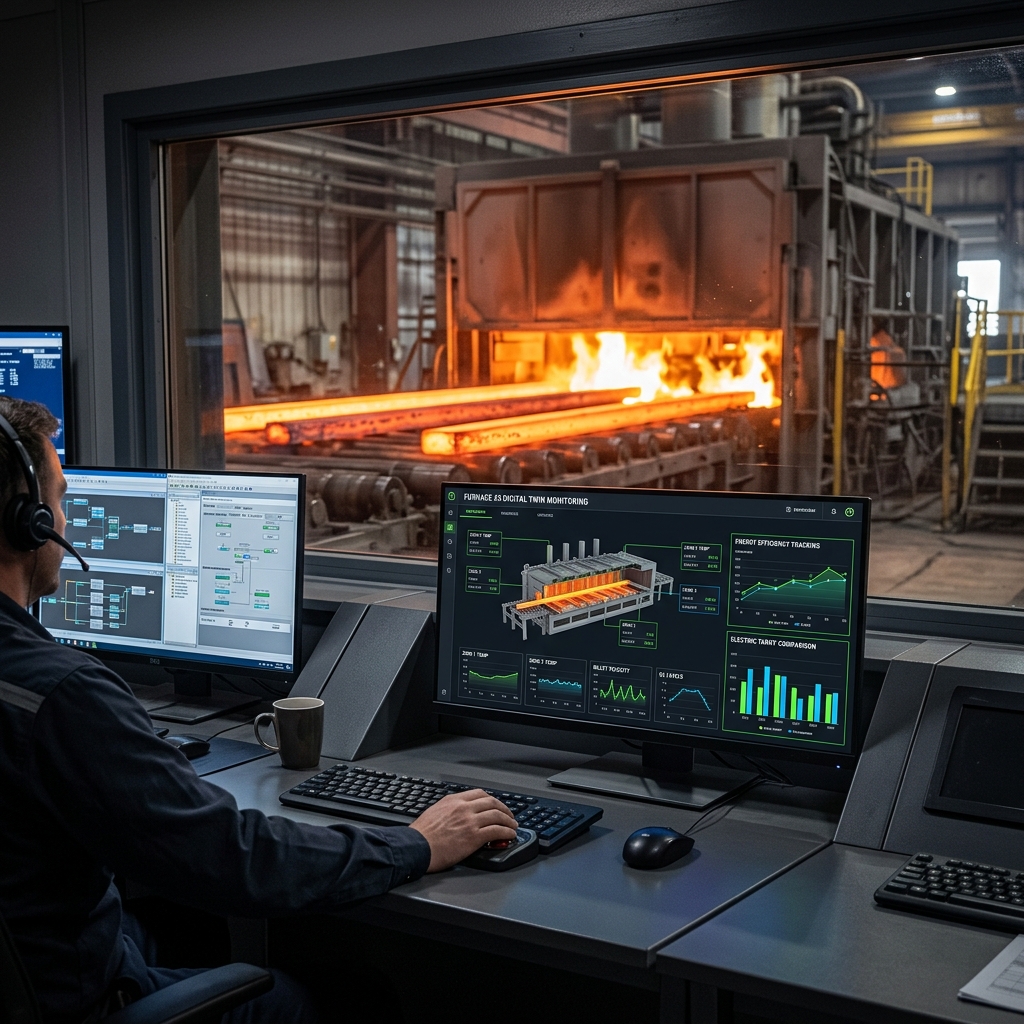
In the highly competitive landscape of Vietnam steel mills, achieving measurable energy savings across rolling lines and reheating furnaces has become a critical survival strategy. According to operational data highlighted by the Vietnam Steel Association (VSA), domestic Vietnam steel production faces mounting margin compression across the 2026 Vietnam steel market, where shifting Vietnam steel demand and surging utility tariffs directly impact operational viability. A structural cost chasm has opened across the Vietnamese steel manufacturing sector. On one side stands Hoa Phat Group, the market giant that has insulated itself from the domestic energy crisis by achieving 90% self-generated electricity across its integrated steel complexes. On the other side are Vietnam's Small and Medium-Sized Enterprises (SMEs) and private rolling mills in Binh Duong, Dong Nai, Long An, and Hai Phong. These mills purchase 100% of their electricity from the grid, exposing them directly to sharp tariff hikes under EVN Decision No. 963/QD-BCT and the emerging Vietnam ETS carbon market.
For an SME mill operating a standard walking beam furnace, energy use accounts for 20% to 30% of total conversion costs. When market leaders generate power at an estimated net cost of 600 VND/kWh ($0.024/kWh) using blast furnace waste heat, while independent mills face peak retail rates of 3,640 VND/kWh ($0.145/kWh), systematically curbing Vietnam steel mill energy consumption and unlocking modern Vietnam steel mill energy efficiency is the only path to protecting operational margins.
See how much you could save using our Energy Steward Model
Based on typical 11% fuel efficiency optimization.
Get Verified ROI AuditSmaller mills are not powerless. By applying CISA T80-certified thermal efficiency technologies and leveraging the performance-contracted Energy Steward model, SMEs can narrow this cost gap, reclaim their operating margins, and secure their export channels against EU CBAM requirements. This technical guide outlines the actionable roadmap to neutralizing the self-generation advantage.
Core Context: What are the six simultaneous survival pressures squeezing Vietnam's steel industry in 2026? Read our foundational guide: [CBAM & EVN 963 Guide] Vietnam Steel Industry 2026: 6 Survival Pressures & ROI Upgrades →
Cost Breakdown: Hoa Phat vs. SME Vietnam Steel Mills (EVN 963)
Before reviewing the technical countermeasures, it is critical to understand the exact cost disadvantage that SME rolling mills must overcome. The table below compares the power economics of a self-generating integrated mill against a grid-reliant B2B rolling mill.
| Parameter | Hoa Phat Integrated Mill (Self-Gen) | SME Rolling Mill (Grid Retail) | Cost Impact & Variance |
|---|---|---|---|
| Electricity Source | 90% Waste Heat Recovery / Gas Turbines | 100% EVN Grid (Decision 963 Tariffs) | 🔴 SME lacks generation assets |
| Average Electricity Cost | ~600 VND/kWh ($0.024) | ~2,150 VND/kWh ($0.086) | 🔴 SME pays 3.58x higher base rate |
| Peak Hour Electricity Tariff | N/A (Internal Generation) | 3,640 VND/kWh ($0.145) | 🔴 SME pays 6.06x higher peak cost |
| Fuel Source for Reheating | Blast Furnace Gas (BFG) / Coal Gas | Natural Gas (CNG/LNG) / LPG | 🔴 SME pays retail gas premiums |
| Reheating Thermal Efficiency | 50% - 55% (Legacy Recuperative) | 68% - 78% (AI Stoichiometric Target) | 🟢 SME advantage via T80 upgrades |
| Carbon Intensity (Reheating) | ~135 kg CO₂ / Ton Steel | ~104 kg CO₂ / Ton Steel | 🟢 SME saves 23% in CBAM emissions |
| Financing CAPEX for Upgrades | Corporate Capital ($500k+ budget) | Zero CAPEX Energy Steward Model | 🟢 SME uses performance-based funding |
1. Virtual Thermal Battery: Bypassing EVN Peak Tariffs via Energy Storage
SME steel mills cannot easily build multi-million dollar waste-heat power plants or chemical battery systems. However, they can enter the industrial energy storage landscape by bypassing EVN's peak-tariff window (5:30 PM – 10:30 PM)—transforming their high-temperature reheating furnaces into virtual thermal energy storage batteries.
The Problem: Peak Hour Grid Penalties
Under EVN Decision No. 963/QD-BCT, the peak-hour rate of 3,640 VND/kWh is a 3.3x multiplier compared to off-peak rates. Traditional furnaces run at a constant temperature profile, meaning they draw maximum electrical power for combustion blowers, cooling water pumps, and hydraulic pushers during the most expensive hours of the day.
The Technical Principle: Predictive Thermal Inertia Control
AI-driven load management relies on the thermodynamic storage capacity of the steel billets themselves. A standard steel billet (e.g., 150mm x 150mm x 12,000mm) has high thermal mass. Our AI system monitors the rolling mill production schedule and implements a three-phase load-shifting cycle:
- Pre-Charging Phase (3:30 PM – 5:30 PM): During the cheaper normal-rate window (2,461 VND/kWh), the AI increases the zone temperatures of the furnace, raising the core temperature of the billets to their upper metallurgical limit (e.g., 1,230°C).
- Shedding Phase (5:30 PM – 10:30 PM): When the peak rate of 3,640 VND/kWh begins, the system reduces the combustion air blowers to their minimum safety speed and lowers zone temperatures. The mill rolls the "pre-charged" billets, drawing on the stored thermal energy. This reduces peak electrical draw by up to 70% without stopping production.
- Restoration Phase (10:30 PM onwards): The system restores steady-state operations during the off-peak rate window (1,094 VND/kWh).
[Normal Rate: 3:30 - 5:30 PM] -> Pre-heat billets to 1,230°C (Thermal Charging)
[Peak Rate: 5:30 - 10:30 PM]  -> Trim burner blowers by 70%, utilize stored heat
[Off-Peak: 10:30 PM onwards]  -> Resume standard combustion at 1,094 VND/kWh tariff
How can a small steel mill reduce peak electricity costs without self-generation capacity?
SME mills can deploy AI-driven Predictive Thermal Inertia Control. By charging billets to their upper thermal limits during normal-rate hours (under 2,461 VND/kWh) and reducing furnace blower speeds during peak-tariff windows (3,640 VND/kWh), the furnace acts as a virtual thermal battery, reducing peak electrical load by up to 70% without stopping production.
"Shengli Steel in Hai Phong implemented this load-shifting program on their 500,000 TPY reheating furnace. By shifting 25% of their electrical draw out of peak hours, they cut their monthly electricity bill by $9,800, proving that small mills can optimize their way around grid hikes." — Li Minghua, Project Director, South Technology
2. Stoichiometric AI Correction to Offset Stop-and-Go Rolling Delays
Unlike integrated giants that run continuous blast furnaces and casting lines, SME rolling mills frequently suffer from stop-and-go rolling operations due to mechanical maintenance, changing roll sizes, or downstream bottlenecks.
The Problem: Idle Fuel Waste and Scale Loss
When the rolling line stops, traditional PLC combustion control loops continue to supply high volumes of excess air to the furnace burners to prevent flameouts. This excess air carries heat straight out through the flue stack, consuming gas without heating steel. Furthermore, the excess oxygen reacts with the hot steel surface, producing thick iron oxide scale, resulting in a 1.2% to 1.5% metal yield loss.
The Technical Principle: Dynamic Air-Fuel Ratio Trim
The T80 intelligent combustion system integrates real-time flue gas oxygen analyzers with mass flow meters. The AI controller runs a continuous feedback loop:
- Real-time Mill Speed Tracking: The AI monitors billet pacing sensors. If a delay exceeding 60 seconds is detected, the controller automatically switches the furnace to "thermal holding mode."
- Stoichiometric Correction: The system trims the air-fuel ratio within 3 seconds, reducing the air blower speed to maintain a low, stable oxygen level (below 1.5%) in the furnace atmosphere.
- Decarburization Prevention: Maintaining stoichiometric balance limits the oxygen available for oxidation, cutting scale loss by 40% and saving valuable steel yield.
[Rolling Delay Detected] -> [AI Trims Air Blower Speed in 3 Seconds] -> [Oxygen Level Maintained < 1.5%] -> [Scale Loss Reduced by 40%]
Why does closed-loop stoichiometric control save fuel during production delays?
During stop-and-go rolling delays, standard PLCs continue supplying excess air to burners to maintain safety. This excess air carries heat out of the flue and accelerates billet scale formation. AI stoichiometric correction detects the delay in real-time, trims combustion blower speeds within 3 seconds, and maintains oxygen levels below 1.5%, saving 7-15% in fuel.
"By installing stoichiometric AI controls, Thang Loi Steel in Binh Duong reduced their natural gas consumption by 11.8% during rolling delays and recovered $7,400 per month in steel yield that was previously lost to scale oxidation." — Dr. Chen Wei, Chief Thermal Engineer, South Technology
3. Full-Fiber Refractory Roofs: Eliminating Thermal Inertia
Integrated steel mills run their furnaces continuously for months at a time, making refractory thermal mass a minor factor. SME mills, however, often shut down on Sundays or during low-demand weeks.
The Problem: High Heat Storage in Castable Linings
Traditional furnace roofs are built with heavy refractory castables or firebricks. These materials have high thermal density. When an SME mill restarts its furnace after a weekend shutdown, it must run the burners for 12 to 24 hours just to heat up the roof before any steel can be rolled, wasting thousands of dollars in gas.
The Technical Principle: Lightweight Ceramic Fiber Insulation
By replacing castable linings with factory-pre-assembled ceramic fiber modules, we change the thermal dynamics of the furnace:
- Low Thermal Mass: Ceramic fibers have 1/10th the density of castables, reducing the roof's heat storage capacity by 60%.
- Rapid Heat-Up: The furnace can reach rolling temperatures (1,200°C) in under 4 hours, down from 16 hours.
- Thermal Shock Resistance: Fiber modules are immune to the thermal cracking that destroys brick roofs during rapid cooling, extending the roof's service life to over 10 years.
[Castable Roof: 16-Hour Startup] -> Massive heat absorption -> High fuel waste
[Full-Fiber Roof: 4-Hour Startup] -> 60% less heat absorption -> Instant fuel savings
How does a full-fiber furnace roof reduce startup fuel consumption?
Traditional refractory castables have high thermal density, taking 12-24 hours to heat up. Low-mass ceramic fiber modules have 1/10th the density, reducing heat storage by 60%. This enables the furnace to reach operating temperatures in under 4 hours, cutting startup gas consumption and allowing flexible scheduling.
4. High-Emissivity Ceramic Coatings for Radiant Heat Transfer
To compete with the low production costs of self-generating competitors, SME mills must maximize the heating rate of their furnaces, shortening the time each billet spends in the heating zones.
The Problem: Radiant Bottlenecks in standard refractories
In a reheating furnace operating above 1,100°C, 90% of heat transfer occurs via radiation. However, standard refractory linings have low emissivity (0.55 to 0.60) at high temperatures. They absorb thermal radiation and slowly conduct it through the furnace shell, resulting in heat loss.
The Technical Principle: Infrared Reflective Surface Physics
By spraying a high-emissivity non-ceramic functional coating onto the inner refractory walls, we optimize the radiant heat path:
- High Emissivity (ε ≥ 0.92): The coating reflects up to 90% of infrared radiation back into the heating chamber.
- Accelerated Heating: Billets absorb heat faster, shortening the heating cycle by 10% to 15%.
- Shell Heat Protection: External furnace shell temperatures drop from 125°C to under 80°C, reducing conduction loss through the walls by 20%.
[Burner Heat] -> [High-E Wall Coating (ε=0.92)] -> [90% Reflected to Billet] -> [15% Faster Heating]
Can high-emissivity coatings withstand the abrasive environment of walking beam furnaces?
Yes. Modern T80-verified high-emissivity coatings use transition metal oxides that molecularly bond with refractory substrates. This prevents peeling, spalling, and cracking even under high-temperature combustion gas turbulence, lasting through multiple major shutdown cycles with a payback period under 6 months.
"We applied our T80 high-emissivity coating to the soaking zone of a Binh Duong rolling mill during a 4-day shutdown. The mill reported a 4.6% reduction in gas consumption and a significant improvement in billet temperature uniformity." — Dr. Chen Wei, Chief Thermal Engineer, South Technology
Interactive Diagnostic Matrix
SME Rolling Mill Combustion & Power Efficiency Checklist
Request On-Site Thermal Audit →
5. Digital Twin Thermal Tracking for CBAM Carbon Compliance
The pressure on SME mills is not just domestic. As of January 1, 2026, the European Union's Carbon Border Adjustment Mechanism (CBAM) requires exporters to pay for the embedded carbon footprint of steel shipped to Europe.
The Problem: Audit Penalties and Data Gaps
European importers are avoiding mills that cannot provide verified, sensor-driven carbon emissions data. Mills that rely on generic carbon intensity estimates face default penalty rates that assume worst-case carbon intensity, wiping out export profits.
The Technical Principle: Sensor-to-Audit Carbon Mapping
Our digital twin platform integrates real-time gas meters, air-flow sensors, and billet temperature tracking into a single compliance module:
- Billet-by-Billet Tracking: The system calculates the exact fuel energy consumed to heat each individual billet.
- Continuous Carbon Intensity Calculation: The AI converts fuel flow directly into kg CO2 per ton of steel.
- Audit-Ready Compliance: The system outputs reports that comply with EU CBAM requirements, allowing exporters to bypass default carbon penalties.
[Gas Flow Sensor] + [Billet Pacing Data] -> [Digital Twin AI Model] -> [Verifiable kg CO₂ / Ton Report] -> [CBAM Certification]
How does a digital twin furnace model help Vietnamese steel mills comply with CBAM?
The digital twin tracks real-time gas consumption, air flow, and billet temperature gradients. By linking this data directly to carbon intensity calculations, the system generates verifiable emissions reports (kg CO2 per ton of steel) required by EU auditors under CBAM, avoiding default penalties.
6. The Solution for SME Budgets: The Zero CAPEX Energy Steward Model
Upgrading combustion controls, installing fiber roofs, and applying high-emissivity coatings requires a capital investment of $300,000 to $500,000 per furnace. For most SME steel mills facing tight margins, this upfront cost is a major barrier.
To solve this, EcoReheating (powered by South Technology) offers the Zero CAPEX Energy Steward Model:
- Full Funding: We cover 100% of the equipment, installation, and AI software costs.
- Zero Risk: The mill pays nothing upfront. We install the systems during your scheduled maintenance shutdowns.
- Performance Sharing: We measure fuel and electricity savings against a certified baseline. The mill pays us a share of the verified savings over a fixed contract term.
- No Savings, No Cost: If the system does not deliver measurable fuel savings, the mill owes us nothing.
[South Tech Funds 100% of Upgrades] -> [System Installed with Zero Downtime] -> [Savings Measured by Gas Meters] -> [Mill Pays from Accrued Savings]
By combining smart thermal load shifting, stoichiometric AI control, and advanced refractories, SME rolling mills can achieve a 7% to 15% fuel saving and reduce electricity costs by up to 35% during peak hours. This level of optimization effectively neutralizes Hoa Phat's self-generation advantage, giving smaller mills the margin they need to survive and compete.
Conclusion: Reclaiming Operating Margins for Vietnam Steel Mills
The competitive advantage of integrated steel giants does not have to spell the demise of private rolling mills. By treating thermal management and electrical load pacing as an engineered system, independent producers can turn their flexibility into an efficiency advantage.
Get Your Free Reheating Furnace Efficiency Assessment
Stop paying retail premiums on wasted energy. In a 30-minute consultation, our thermal engineers will analyze your production capacity and calculate your exact energy saving potential — backed by CISA T80 standards.
No commitment required. Custom ROI and carbon roadmap delivered within 5 business days.
See how much you could save using our Energy Steward Model
Based on typical 11% fuel efficiency optimization.
Get Verified ROI AuditFrequently Asked Questions
Q.How much energy savings can a Vietnam steel mill achieve without capital expenditure?
Under the Zero CAPEX Energy Steward model, SME rolling mills in Vietnam typically achieve a 7% to 15% reduction in reheating furnace fuel consumption and up to a 35% reduction in peak-hour electricity costs through AI thermal load shifting and CISA T80-listed engineering upgrades.
Q.How can a small steel mill reduce peak electricity costs without self-generation capacity?
SME mills can deploy AI-driven Predictive Thermal Inertia Control. By charging billets to their upper thermal limits during normal-rate hours (under 2,461 VND/kWh) and reducing furnace blower speeds during peak-tariff windows (3,640 VND/kWh), the furnace acts as a virtual thermal battery, reducing peak electrical load by up to 70% without stopping production.
Q.Why does closed-loop stoichiometric control save fuel during production delays?
During stop-and-go rolling delays, standard PLCs continue supplying excess air to burners to maintain safety. This excess air carries heat out of the flue and accelerates billet scale formation. AI stoichiometric correction detects the delay in real-time, trims combustion blower speeds within 3 seconds, and maintains oxygen levels below 1.5%, saving 7-15% in fuel.
Q.How does a full-fiber furnace roof reduce startup fuel consumption?
Traditional refractory castables have high thermal density, taking 12-24 hours to heat up. Low-mass ceramic fiber modules have 1/10th the density, reducing heat storage by 60%. This enables the furnace to reach operating temperatures in under 4 hours, cutting startup gas consumption and allowing flexible scheduling.
Q.Can high-emissivity coatings withstand the abrasive environment of walking beam furnaces?
Yes. Modern T80-verified high-emissivity coatings use transition metal oxides that molecularly bond with refractory substrates. This prevents peeling, spalling, and cracking even under high-temperature combustion gas turbulence, lasting through multiple major shutdown cycles with a payback period under 6 months.
Q.How does a digital twin furnace model help Vietnamese steel mills comply with CBAM?
The digital twin tracks real-time gas consumption, air flow, and billet temperature gradients. By linking this data directly to carbon intensity calculations, the system generates verifiable emissions reports (kg CO2 per ton of steel) required by EU auditors under CBAM, avoiding default penalties.
Li Minghua
Project Director, South Technology
Li Minghua has over 10 years of experience in project management and energy ROI analysis for B2B industrial systems. He specializes in designing performance-based Zero CAPEX models for steel reheating furnace modernizations.